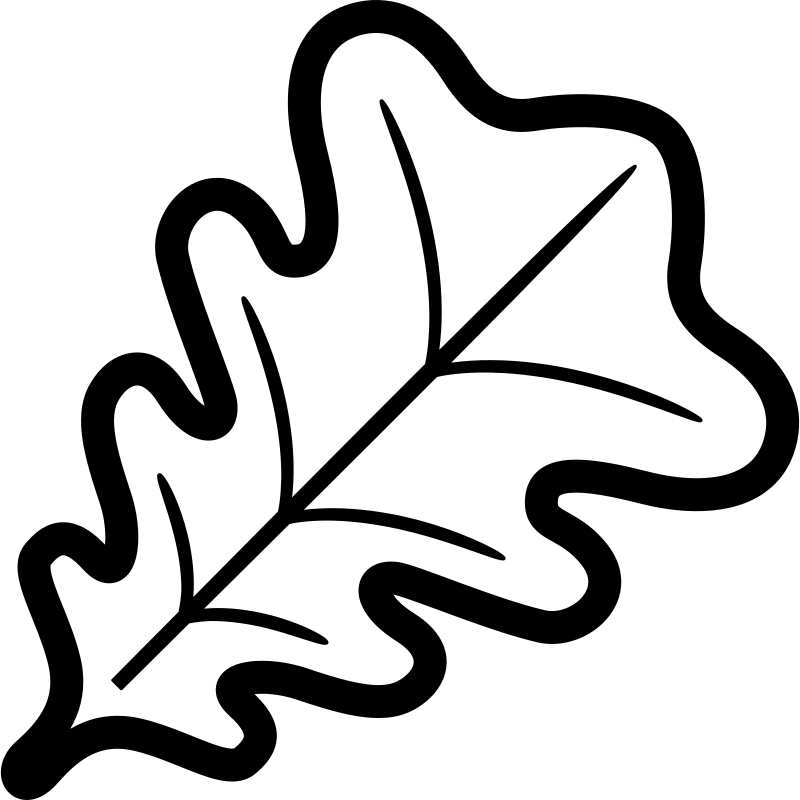
White Oak (Quercus alba), also called American White Oak, Eastern White Oak, Forked-leaf White Oak, Northern White Oak, Oaks.
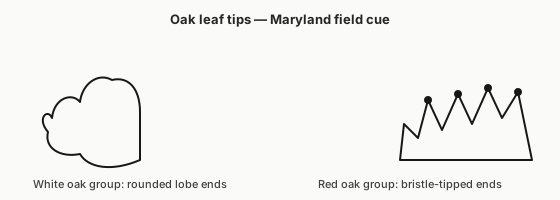
The white oak is a large slow growing deciduous, hardwood tree in the beach (Fagaceae) family and can reach heights of 135 feet with an 80-foot spread, but generally tops out at 80 to 100 feet. It is native to the eastern United States and is usually found in forested areas of dry slopes, valleys, and ravines. Young trees are typically pyramidal in form, but as the tree matures it has a rounded and broad crown. The distinct feature of this tree is its fingerlike lobed leaves with rounded tips and no bristles.
The genus name, Quercus, is the Latin name for oak trees. The epithet, alba, means white. This refers to the bark's ash-gray bark color. The common name is a reference to the color of the finished wood, not the bark.
The plant's fall foliage color is dark reddish to brown. The male flowers are the showiest in long catkins and the female flowers are inconspicuous. The fruit is a 3/4 to 1 inch long brown acorn with a lumpy cap.
Identification
The leaves are 4 to 9 inches long by 2 to 4 inches wide with 5 to 9 deep, rounded, and even lobes per leaf. They have a rounded tip and a wedge-shaped base and have no bristles. The sinuses vary in depth, and some may reach near the midrib. The color is bright green with whitish or glaucous undersides. The fall color is purplish brown to reddish-brown and develops late. A few leaves may persist into winter. Leaves are alternate, simple, elliptical, obovate, oblong-obovate, and cuneate. Lobes are entire and obtuse.
The bark is whitish or light ashy gray, scaly. shallowly furrowed and divided into flat narrow plates or vertical blocks. They may become flakey with age.
Male flowers are produced as greenish-yellow catkins in pendulous long chains about 2-3½" long and arranged in clusters. Female flowers are not showy and smaller than male flowers. They are greenish-red and appear as a few spikes in the axils of emerging leaves. Flowers appear in April.
The fruit is 3/4 to 1-inch-long acorns that are elongated and have a shallow cup that covers 1/4 to 1/3 of the nut. The cup appears lumpy, light tan, or gray with warty scales. Acorns mature the first year and can be numerous. They are initially green and then ripen to a light brown color. Nuts appear from September-November.
Habitat and cultural conditions
The white oak prefers full sun to partial shade in coarse, deep, moist, well-drained, loamy, slightly acidic soil but is adaptable to other soil types and is fairly drought tolerant once established. Wet sites should be avoided. The deep taproot makes it difficult to transplant. The tree is propagated by seeds.
Uses and significance
Use white oak as a shade tree for large yards or parks, or in a naturalized area for wildlife to enjoy. It is suitable for butterfly, children’s, drought-tolerant, edible, native, nighttime, and pollinator gardens. However, it should not be planted near structures or pavement due to its eventual size. It is also toxic to horses.
Hardwood timber is used for flooring, woodwork, wine barrels, or whisky barrels. Ships were built from the timber in the colonial period. The acorns were used by Native Americans for medications.
Oak trees support a wide variety of Lepidopteran. You may see Imperial Moth (Eacles imperialis) larvae which have one brood per season and appear from April-October in the south. Adult Imperial Moths do not feed. Banded Hairstreak (Satyrium calanus), which have one flight from June-August everywhere but Florida where they emerge April-May. Edward's Hairstreak (Satyrium edwardsii), has one flight from May-July in the south and June-July in the north. Gray Hairstreak (Strymon melinus), has three to four flights in the south from February-November and two flights in the north from May-September. White-M Hairstreak (Parrhasius m-album) has three broods in the north from February-October. Horace’s Duskywing (Erynnis horatius) has three broods in Texas and the deep south from January-November, and two broods in the north from April-September. Juvenal’s Duskywing (Erynnis juvenalis) has one brood from April-June, appearing as early as January in Florida. The Acorns are eaten by woodpeckers, blue joys, small mammals, wild turkeys, white-tailed deer, and black bear.
Insects, diseases, and other problems
Numerous insect and disease pests, but the damage is rarely significant. The white oak is susceptible to oak wilt, anthracnose, cankers, leaf spots, powdery mildew, and oak leaf blister. Potential pests include scales, oak skeletonizers, leaf miners, aphids, galls, orangestriped oakworm, buck moth, whitemarked tussock moth, and lace bugs. Chlorosis can occur if the pH in the soil is too high, resulting in iron deficiency. White oak is sensitive to soil compaction and susceptible to wind damage. It can be messy.
Plant details
Attributes
- Genus: Quercus
- Species: alba
- Family: Fagaceae
- Uses (Ethnobotany): Hardwood timber is used for flooring, woodwork, wine barrels, or whisky barrels. Ships were built from the timber in the colonial period. The acorns were used by Native Americans for medications.
- Life Cycle: Woody
- Recommended Propagation Strategy: Seed
- Country Or Region Of Origin: South East Canada to Central & Eastern U.S.A
- Distribution: Native: United States--AL, AR, CT, DE, FL, GA, IL, IN, IA, KS, KY, LA, ME, MD, MA, MI, MN, MS, MO, NE, NH, NJ, NY, NC, OH, OK, PA, RI, SC, TN, TX, VT, VA, WV, and WI; Canada--Ontario and Quebec. Introduced: Leeward Islands
- Fire Risk Rating: low flammability
- Wildlife Value: Oak trees support a wide variety of Lepidopteran. You may see Imperial Moth (Eacles imperialis) larvae which have one brood per season and appear from April-October in the south. Adult Imperial Moths do not feed. Banded Hairstreak (Satyrium calanus), which have one flight from June-August everywhere but Florida where they emerge April-May. Edward's Hairstreak (Satyrium edwardsii), has one flight from May-July in the south and June-July in the north. Gray Hairstreak (Strymon melinus), has three to four flights in the south from February-November and two flights in the north from May-September. White-M Hairstreak (Parrhasius m-album) has three broods in the north from February-October. Horace’s Duskywing (Erynnis horatius) has three broods in Texas and the deep south from January-November, and two broods in the north from April-September. Juvenal’s Duskywing (Erynnis juvenalis) has one brood from April-June, appearing as early as January in Florida. The Acorns are eaten by woodpeckers, blue joys, small mammals, wild turkeys, white-tailed deer, and black bear.
- Play Value: Edible fruit; Wildlife Food Source; Wildlife Larval Host; Wildlife Nesting
- Edibility: Acorns (nuts) are edible after tannins are leached or boiled out
- Dimensions: Height: 50 ft. 0 in. - 135 ft. 0 in.; Width: 50 ft. 0 in. - 80 ft. 0 in.
Whole Plant Traits
- Plant Type: Native Plant; Perennial; Poisonous; Tree
- Woody Plant Leaf Characteristics: Deciduous
- Habit/Form: Broad; Dense; Pyramidal; Rounded; Spreading
- Growth Rate: Slow
- Maintenance: Medium
- Texture: Medium
Cultural Conditions
- Light: Full sun (6 or more hours of direct sunlight a day); Partial Shade (Direct sunlight only part of the day, 2-6 hours)
- Soil Texture: Clay; Loam (Silt); Sand
- Soil pH: Acid (<6.0)
- Soil Drainage: Good Drainage; Moist; Occasionally Dry
- Available Space To Plant: more than 60 feet
- NC Region: Coastal; Mountains; Piedmont
- USDA Plant Hardiness Zone: 3a, 3b, 4a, 4b, 5a, 5b, 6a, 6b, 7a, 7b, 8a, 8b, 9a, 9b
Fruit
- Fruit Color: Brown/Copper; Gray/Silver
- Display/Harvest Time: Fall
- Fruit Type: Nut
- Fruit Length: < 1 inch
- Fruit Width: < 1 inch
- Fruit Description: The fruit is 3/4 to 1-inch-long acorns that are elongated and have a shallow cup that covers 1/4 to 1/3 of the nut. The cup appears lumpy, light tan, or gray with warty scales. Acorns mature the first year and can be numerous. They are initially green and then ripen to a light brown color. Nuts appear from September-November.
Flowers
- Flower Color: Gold/Yellow; Green; Red/Burgundy
- Flower Inflorescence: Catkin; Insignificant
- Flower Bloom Time: Spring
- Flower Description: Male flowers are produced as greenish-yellow catkins in pendulous long chains about 2-3½" long and arranged in clusters. Female flowers are not showy and smaller than male flowers. They are greenish-red and appear as a few spikes in the axils of emerging leaves. Flowers appear in April.
Leaves
- Woody Plant Leaf Characteristics: Deciduous
- Leaf Color: Green; White
- Deciduous Leaf Fall Color: Brown/Copper; Purple/Lavender; Red/Burgundy
- Leaf Type: Simple
- Leaf Arrangement: Alternate
- Leaf Shape: Cuneate; Elliptical; Obovate
- Leaf Margin: Entire; Lobed
- Hairs Present: No
- Leaf Length: 3-6 inches
- Leaf Width: 3-6 inches
- Leaf Description: The leaves are 4 to 9 inches long by 2 to 4 inches wide with 5 to 9 deep, rounded, and even lobes per leaf. They have a rounded tip and a wedge-shaped base and have no bristles. The sinuses vary in depth, and some may reach near the midrib. The color is bright green with whitish or glaucous undersides. The fall color is purplish brown to reddish-brown and develops late. A few leaves may persist into winter. Leaves are alternate, simple, elliptical, obovate, oblong-obovate, and cuneate. Lobes are entire and obtuse.
Bark
- Bark Color: Light Gray
- Surface/Attachment: Peeling; Ridges
- Bark Plate Shape: Irregular
- Bark Description: The bark is whitish or light ashy gray, scaly. shallowly furrowed and divided into flat narrow plates or vertical blocks. They may become flakey with age.
Stem
- Stem Color: Brown/Copper; Gray/Silver; Red/Burgundy
- Stem Is Aromatic: No
- Stem Lenticels: Conspicuous
- Stem Surface: Smooth (glabrous)
- Stem Description: Branch bark is light gray and smooth. Twigs are reddish-brown to purplish brown and smooth with scattered white lenticels. Buds are ovoid, blunt, up to 1/4" long, have imbricate scales, are reddish-brown to brown, and are pubescent hairy near ends.
Landscape
- Landscape Location: Lawn; Meadow; Naturalized Area; Recreational Play Area
- Landscape Theme: Butterfly Garden; Children's Garden; Drought Tolerant Garden; Edible Garden; Native Garden; Nighttime Garden; Pollinator Garden
- Design Feature: Flowering Tree; Shade Tree; Specimen
- Attracts: Butterflies; Moths; Pollinators; Small Mammals; Songbirds
- Resistance To Challenges: Black Walnut; Deer; Drought; Dry Soil; Fire; Heat; Salt
- Problems: Messy; Poisonous to Humans; Problem for Horses
Poisonous to Humans
- Poison Severity: Low
- Poison Symptoms: Abdominal pain, constipation then diarrhea (occasionally bloody), depression, frequent urination, discolored urine, jaundice; acorns can obstruct the digestive tract
- Poison Toxic Principle: Gallotannins, quercitrin, and quercitin.
- Causes Contact Dermatitis: No
- Poison Part: Leaves; Seeds
Further reading
- N.C. Extension Gardener Plant Toolbox: Quercus alba — primary source for the plant details above