Red Maple (Acer rubrum), also called Carolina Maple, Scarlet Maple, Soft Maple, Swamp Maple.
Red maple is a native, deciduous tree in the maple family (Sapindaceae). In nature, it can be found growing in upland deciduous forests, up to an elevation of at least 5000 feet, throughout eastern North America. The specific epithet, rubrum, means “red” in Latin and references the flowers and fall foliage of this tree.
Red maple is easy to grow in average, medium to wet, well-drained soil in full sun to partial shade. It is tolerant of a wide range of soils, including clay, but prefers moist, slightly acidic conditions. It is very cold-hardy and grows fairly fast, with tolerance to urban conditions.
Red maple may grow to 120 feet tall with a trunk 6 feet in diameter but is more commonly 40 to 70 feet high and 1½ to 2½ feet across. It is a handsome shade tree with a rounded crown and ascending branches to a 30- to 50-foot spread. The red maple has a slightly smaller leaf than most other maple species, and its leaf margins are serrated. Small, red flowers in clusters mature in late winter, followed by light brown or red-winged samaras. Early in the fall, the leaves turn an attractive red. Color may vary from tree to tree and cultivar to cultivar.
Previously known as: Acer carolinianum; Acer rubrum var. drummondii; Acer rubrum var. tridens; Acer rubrum var. trilobum; Acer sanguineum.
Identification
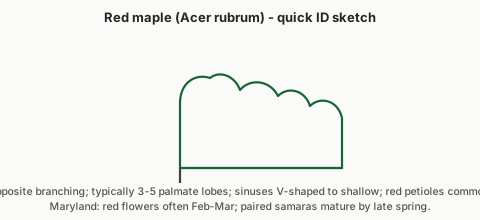
Palmately veined with 3-5 principal triangular lobes with the lower 2 being much smaller. Margins are irregularly and coarsely toothed, medium to dark green above, grayish beneath with hairy veins, petiole 2-4" long and red. Brilliant red, orange, and yellow colors show during fall. The leaves are 2 to 6 inches long and are somewhat broader than long.
Young bark is smooth and light gray. On old trunks, the bark is thick, dark gray and separated by vertical ridges into large, plate-like, scales.
The polygamous flowers grow in short-stemmed drooping clusters in springtime, before the leaves appear. In North Carolina, red maple flowers from January to March.
The paired, winged, fruit is in a "V" shaped, red, pink, or yellow, winged samara about 3/4 of an inch long on drooping stems. They turn tan or brown when mature and drop from the plant. In North Carolina, the samaras are available from April to July.
Habitat and cultural conditions
This tree is a great choice for a native maple. It makes an excellent lawn, park or street tree, but it makes a dense mat of surface roots that outcompete other plants growing in its shade. It is difficult to grow herbaceous plants among this dense root mat. It fits almost any garden theme.
Uses and significance
Native Americans are known to have used parts of this tree as sweeteners, in food, and in medicine. The wood isused as pulpwood and in the manufacture of furniture and woodenware.
Bees are attracted to the early nectar source of the flowers. Members of the genus Acer support Imperial Moth (Eacles imperialis) larvae which have one brood per season and appear from April-October in the south. Adult Imperial Moths do not feed. Flower nectar attracts bees and other pollinators. Seeds are enjoyed by birds. The fruit, along with the buds, are a primary food source for gray squirrels in late winter and early spring. Sprouts are a favorite food for white-tailed deer, but this tree is moderately resistant to damage.
Insects, diseases, and other problems
Fire Risk: This plant has a low flammability rating.
In alkaline soils, it can develop manganese chlorosis. Watch for aphids, leafhoppers, borers, scale, and caterpillars. Also note that verticillium wilt attacks the vascular system and can be fatal. Canker, fungal leaf spot, and root rots may also occur. Wind and ice may break some branches. This tree has a shallow root system that may buckle nearby sidewalks or driveways if planted too close. The Clemson Cooperative Extension Home and Garden Information Center has a factsheet on common maple diseases and insect pests.
Cultivars / varieties
- 'Armstrong Gold' — Columnar habit, dense, compact with improved fall color
- 'Autumn Fantasy' — Rapid growth, good branch angles, consistent red fall color
- 'Autumn Radiance' — Good shade tree, consistent red in fall, intolerant of alkaline soil
- 'Bowhall' — Narrow, columnar with a tight, pyramidal form, brilliant fall color
- 'Brandywine' — Male selection, intense and consistent fall color.
- 'Burgandy Belle' or 'Magnificent Magenta'
- 'Embers' — Fast-growing cultivar. Dense, broadly rounded crown, showy spring flowers and fall foliage
- 'Franksred' — Outstanding orange to red fall color.
- 'Karpick' — Male, narrow form (20 foot spread). Good yellow or red foliage.
- 'October Glory' — Female, exceptional fall color.
- 'Red Rocket' — columnar form, consistant red fall color
- 'Red Sunset' — Good shade tree, early brilliant orange-scarlet fall color
- 'Somerset' — 23 ft tall, long-lasting red fall color
- 'Summer Red' — 35’-40′ tall, Emerges burgundy-red, yellow, orange, purple in fall
- 'Sun Valley' — Male, smaller and more symetrical.
Plant details
Attributes
- Genus: Acer
- Species: rubrum
- Family: Sapindaceae
- Uses (Ethnobotany): Native Americans are known to have used parts of this tree as sweeteners, in food, and in medicine. The wood isused as pulpwood and in the manufacture of furniture and woodenware.
- Life Cycle: Woody
- Recommended Propagation Strategy: Root Cutting; Seed; Stem Cutting
- Country Or Region Of Origin: Newfoundland to Florida West to Minnesota Oklahoma and Texas.
- Distribution: throughout North Carolina.
- Fire Risk Rating: low flammability
- Wildlife Value: Bees are attracted to the early nectar source of the flowers. Members of the genus Acer support Imperial Moth (Eacles imperialis) larvae which have one brood per season and appear from April-October in the south. Adult Imperial Moths do not feed. Flower nectar attracts bees and other pollinators. Seeds are enjoyed by birds. The fruit, along with the buds, are a primary food source for gray squirrels in late winter and early spring. Sprouts are a favorite food for white-tailed deer, but this tree is moderately resistant to damage.
- Play Value: Attracts Pollinators; Buffer; Colorful; Edible fruit; Pieces Used in Games; Screening; Shade; Wildlife Food Source; Wind Break
- Particularly Resistant To (Insects/Diseases/Other Problems): Resistant to fire in landscape. Tolerates wet soil occasionally.
- Edibility: The sap contains sugar and this can be used as a drink or be concentrated into a syrup by boiling off the water. The syrup is used as a sweetener on many foods. This species only yields about half the quantity obtained from the sugar maple (A. saccharum).
- Dimensions: Height: 40 ft. 0 in. - 120 ft. 0 in.; Width: 30 ft. 0 in. - 50 ft. 0 in.
Whole Plant Traits
- Plant Type: Native Plant; Perennial; Tree
- Woody Plant Leaf Characteristics: Deciduous
- Habit/Form: Oval; Pyramidal
- Growth Rate: Rapid
- Maintenance: Low
- Texture: Medium
Cultural Conditions
- Light: Full sun (6 or more hours of direct sunlight a day); Partial Shade (Direct sunlight only part of the day, 2-6 hours)
- Soil Texture: Clay; High Organic Matter; Loam (Silt); Sand
- Soil pH: Acid (<6.0); Neutral (6.0-8.0)
- Soil Drainage: Good Drainage; Moist; Occasional Flooding; Occasionally Dry; Occasionally Wet
- Available Space To Plant: more than 60 feet
- NC Region: Coastal; Mountains; Piedmont
- USDA Plant Hardiness Zone: 2a, 2b, 3a, 3b, 4a, 4b, 5a, 5b, 6a, 6b, 7a, 7b, 8a, 8b, 9a, 9b
Fruit
- Fruit Color: Brown/Copper; Gold/Yellow; Red/Burgundy; Variegated
- Fruit Value To Gardener: Showy
- Display/Harvest Time: Spring; Summer
- Fruit Type: Samara
- Fruit Length: < 1 inch
- Fruit Description: The paired, winged, fruit is in a "V" shaped, red, pink, or yellow, winged samara about 3/4 of an inch long on drooping stems. They turn tan or brown when mature and drop from the plant. In North Carolina, the samaras are available from April to July.
Flowers
- Flower Color: Red/Burgundy
- Flower Inflorescence: Catkin
- Flower Value To Gardener: Fragrant
- Flower Bloom Time: Spring; Winter
- Flower Size: < 1 inch
- Flower Description: The polygamous flowers grow in short-stemmed drooping clusters in springtime, before the leaves appear. In North Carolina, red maple flowers from January to March.
Leaves
- Woody Plant Leaf Characteristics: Deciduous
- Leaf Color: Gold/Yellow; Green; Orange
- Leaf Feel: Slippery
- Leaf Value To Gardener: Showy
- Deciduous Leaf Fall Color: Gold/Yellow; Red/Burgundy
- Leaf Type: Simple
- Leaf Arrangement: Opposite
- Leaf Shape: Deltoid; Palmatifid
- Leaf Margin: Serrate
- Hairs Present: No
- Leaf Length: 3-6 inches
- Leaf Width: 3-6 inches
- Leaf Description: Palmately veined with 3-5 principal triangular lobes with the lower 2 being much smaller. Margins are irregularly and coarsely toothed, medium to dark green above, grayish beneath with hairy veins, petiole 2-4" long and red. Brilliant red, orange, and yellow colors show during fall. The leaves are 2 to 6 inches long and are somewhat broader than long.
Bark
- Bark Color: Light Gray
- Surface/Attachment: Ridges; Smooth
- Bark Description: Young bark is smooth and light gray. On old trunks, the bark is thick, dark gray and separated by vertical ridges into large, plate-like, scales.
Stem
- Stem Color: Gray/Silver; Red/Burgundy
- Stem Is Aromatic: No
- Stem Description: Stems slender, red, and shiny. Buds are red. Winter buds have three or more scales that overlap like shingles, with one edge covered and the other edge exposed.
Landscape
- Landscape Location: Recreational Play Area; Riparian; Woodland
- Landscape Theme: Butterfly Garden; Children's Garden; Drought Tolerant Garden; Native Garden; Nighttime Garden; Pollinator Garden; Rain Garden; Winter Garden
- Design Feature: Accent; Shade Tree; Specimen; Street Tree
- Attracts: Bees; Butterflies; Moths; Pollinators; Small Mammals; Songbirds; Specialized Bees
- Resistance To Challenges: Black Walnut; Compaction; Deer; Drought; Fire; Heat; Pollution; Urban Conditions; Wet Soil
- Problems: Problem for Horses
Further reading
- N.C. Extension Gardener Plant Toolbox: Acer rubrum — primary source for the plant details above