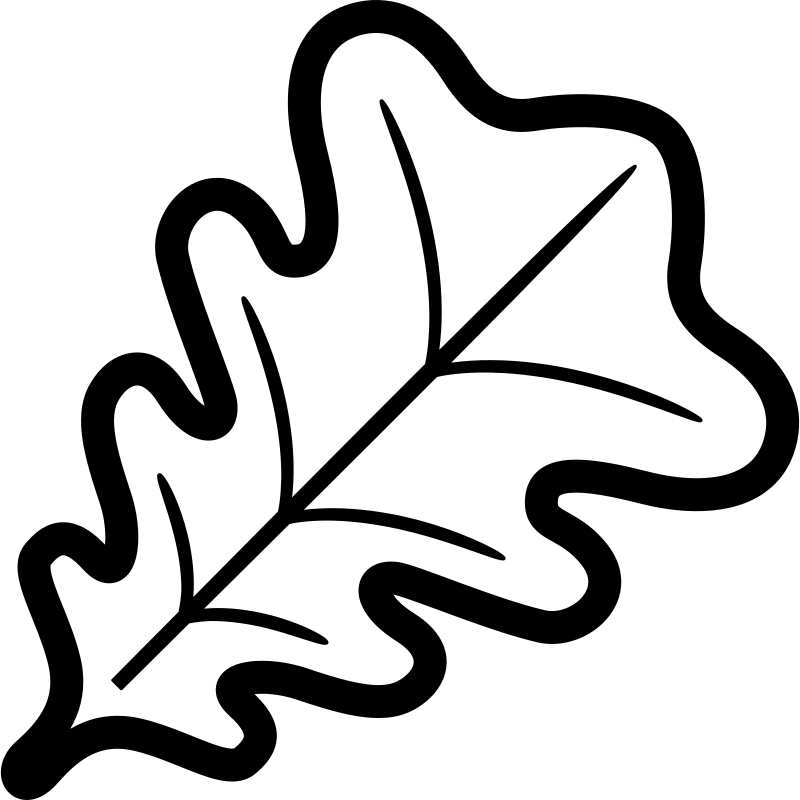
Northern Red Oak (Quercus rubra), also called American Red Oak, Eastern Red Oak, Mountain Red Oak, Oaks, Red Oak.
Northern Red Oak is a medium-sized, moderate to fast-growing, deciduous tree with a rounded to broad spreading crown that branches close to the ground. It may grow 50 to 75 feet tall and equally as wide. It has green leaves on the upper sides and the undersides are grayish-white. They have 7 to 11 pointed lobes that are sharply pointed at the tips. The fall foliage is reddish-brown. Inconspicuous male and female flowers appear in the spring, and the fruits appear in the fall. The fruits are acorns that are rounded and large. This tree is a member of the Fagaceae or beech family.
The northern red oak is native to Eastern North America and is found throughout the Piedmont and mountain areas of North Carolina. It commonly grows on mesic slopes and well-drained uplands, lower and middle slopes, coves, ravines, or valley floors.
The genus name, Quercus, is the Latin name for oak trees. The epithet, rubra, means, red.
Identification
The 7-inch leaves are divided less than halfway to the mid-vein into 7–11 shallow wavy lobes with a few irregular bristle-tipped teeth. The leaves are glabrous and dull green above and light dull green below with tufts of hairs in the vein angles. The fall color is usually brownish-red to scarlet and very attractive. Some of the leaves may remain on the tree through the winter months.
The bark is dark gray or light gray and is shallowly furrowed into
broad hard scaly ridges. The inner bark is reddish to pink.
There are male and female flowers are produced on the same tree. The male flowers are drooping yellowish-green catkins that are about 2 to 4 inches long. The female flower is about 1/8 inch in diameter and oval. Blooms from April to May. The fertilized female flower is replaced by an acorn that takes 2 years to develop.
Produces 0.75- to 1.5-inch-long acorns singly or in pairs on a very short stem. The acorn is brown to reddish-brown and smooth. The wide cap covers the upper 1/4 of the nut. The tree may reach 40 years of age before producing acorns. Displays from August to October. The meat inside the acorn is white and bitter to taste.
Habitat and cultural conditions
The northern red oak prefers full sun, moist to dry, well-drained, acidic, fertile, sandy to loamy soils. Once established, they are drought, dry soil, black walnut, and air pollution tolerant. It is easily transplanted.
Uses and significance
The northern red oak is typically planted for its ornamental value due to its shape and fall foliage. It is also an important food source for squirrels, deer, and birds. It may be used as a specimen, shade tree, street tree, and in recreational areas.
The acorns of red oak (and other oak species) were an important food source for Native Americans. Some tribes are known to have used the bark as medicine for heart troubles and bronchial infections. It was also used as an astringent, disinfectant, and cleanser. The lumber is used for furniture, veneer, interior finishing, cabinets, paneling, and flooring as well as for agricultural implements, posts, and railway ties
Oak trees support a wide variety of Lepidopteran. You may see Imperial Moth (Eacles imperialis) larvae which have one brood per season and appear from April-October in the south. Adult Imperial Moths do not feed. Banded Hairstreak (Satyrium calanus), which have one flight from June-August everywhere but Florida where they emerge April-May. Edward's Hairstreak (Satyrium edwardsii), has one flight from May-July in the south and June-July in the north. Gray Hairstreak (Strymon melinus), has three to four flights in the south from February-November and two flights in the north from May-September. White-M Hairstreak (Parrhasius m-album) has three broods in the north from February-October. Horace’s Duskywing (Erynnis horatius) has three broods in Texas and the deep south from January-November, and two broods in the north from April-September. Juvenal’s Duskywing (Erynnis juvenalis) has one brood from April-June, appearing as early as January in Florida. The acorns are eaten by woodpeckers, blue jays small mammals, wild turkeys white-tailed deer and black bears.
Insects, diseases, and other problems
The northern red oak has no serious insect or disease problems. It is susceptible to oak wilt and chlorosis (yellowing of the leaves while the veins remain green) which can occur when soil is not sufficiently acidic. Potential insect pests include carpenter worms, timber beetle, red oak borer, and chestnut borer. The most destructive is the gypsy moth that defoliates the trees. Nut weevils, filbert worms, and acorn moth cause damage to the acorns.
Cultivars / varieties
- 'Aurea' — This selection features young leaves with a golden yellow color. This effect will probably fade with the onset of hot weather
- 'Splendens' — Notable for its fine red fall color. It is not commonly available.
Plant details
Attributes
- Genus: Quercus
- Species: rubra
- Family: Fagaceae
- Uses (Ethnobotany): The acorns of red oak (and other oak species) were an important food source for Native Americans. Some tribes are known to have used the bark as medicine for heart troubles and bronchial infections. It was also used as an astringent, disinfectant, and cleanser. The lumber is used for furniture, veneer, interior finishing, cabinets, paneling, and flooring as well as for agricultural implements, posts, and railway ties
- Life Cycle: Perennial; Woody
- Recommended Propagation Strategy: Seed
- Country Or Region Of Origin: Southeastern Canada to North-Central and Eastern United States
- Distribution: Native: United States--AL, AR, CT, DE, DC, GA, IL, IN, IA, KS, KY, LA, ME, MD, MA, MI, MN, MS, MO, NE, NH, NJ, NY, NC, OH, OK, PA, RI, SC, TN, VT, VA, WV, and WI. Canada--New Brunswick, Nova Scotia, Ontario, Prince Edward Island, and Quebec.
Introduced: Austria, Belgium Czechoslovakia, Denmark, France, Germany, Hungry, Italy, Netherlands, New Zealand, Norway, Poland, Portugal, Romania, Spain, Sweden, Switzerland, and Ukraine.
- Fire Risk Rating: low flammability
- Wildlife Value: Oak trees support a wide variety of Lepidopteran. You may see Imperial Moth (Eacles imperialis) larvae which have one brood per season and appear from April-October in the south. Adult Imperial Moths do not feed. Banded Hairstreak (Satyrium calanus), which have one flight from June-August everywhere but Florida where they emerge April-May. Edward's Hairstreak (Satyrium edwardsii), has one flight from May-July in the south and June-July in the north. Gray Hairstreak (Strymon melinus), has three to four flights in the south from February-November and two flights in the north from May-September. White-M Hairstreak (Parrhasius m-album) has three broods in the north from February-October. Horace’s Duskywing (Erynnis horatius) has three broods in Texas and the deep south from January-November, and two broods in the north from April-September. Juvenal’s Duskywing (Erynnis juvenalis) has one brood from April-June, appearing as early as January in Florida. The acorns are eaten by woodpeckers, blue jays small mammals, wild turkeys white-tailed deer and black bears.
- Play Value: Buffer; Edible fruit; Screening; Wildlife Cover/Habitat; Wildlife Food Source
- Particularly Resistant To (Insects/Diseases/Other Problems): Resistant to fire and moderately resistant to damage from deer.
- Edibility: Acorns (nuts) are edible after tannins are leached or boiled out.
- Dimensions: Height: 50 ft. 0 in. - 70 ft. 0 in.; Width: 50 ft. 0 in. - 75 ft. 0 in.
Whole Plant Traits
- Plant Type: Native Plant; Perennial; Poisonous; Tree
- Woody Plant Leaf Characteristics: Deciduous
- Habit/Form: Conical; Dense; Erect; Rounded
- Growth Rate: Rapid
- Maintenance: Low
- Texture: Medium
Cultural Conditions
- Light: Full sun (6 or more hours of direct sunlight a day); Partial Shade (Direct sunlight only part of the day, 2-6 hours)
- Soil Texture: Loam (Silt); Sand
- Soil pH: Acid (<6.0); Neutral (6.0-8.0)
- Soil Drainage: Good Drainage; Moist; Occasionally Dry
- Available Space To Plant: more than 60 feet
- NC Region: Coastal; Mountains; Piedmont
- USDA Plant Hardiness Zone: 4a, 4b, 5a, 5b, 6a, 6b, 7a, 7b, 8a, 8b
Fruit
- Fruit Color: Brown/Copper; Red/Burgundy
- Display/Harvest Time: Fall
- Fruit Type: Nut
- Fruit Length: < 1 inch
- Fruit Width: < 1 inch
- Fruit Description: Produces 0.75- to 1.5-inch-long acorns singly or in pairs on a very short stem. The acorn is brown to reddish-brown and smooth. The wide cap covers the upper 1/4 of the nut. The tree may reach 40 years of age before producing acorns. Displays from August to October. The meat inside the acorn is white and bitter to taste.
Flowers
- Flower Color: Gold/Yellow; Green
- Flower Inflorescence: Catkin; Insignificant
- Flower Bloom Time: Spring
- Flower Size: 1-3 inches
- Flower Description: There are male and female flowers are produced on the same tree. The male flowers are drooping yellowish-green catkins that are about 2 to 4 inches long. The female flower is about 1/8 inch in diameter and oval. Blooms from April to May. The fertilized female flower is replaced by an acorn that takes 2 years to develop.
Leaves
- Woody Plant Leaf Characteristics: Deciduous
- Leaf Color: Gray/Silver; Green
- Leaf Value To Gardener: Showy
- Deciduous Leaf Fall Color: Brown/Copper; Red/Burgundy
- Leaf Type: Simple
- Leaf Arrangement: Alternate
- Leaf Shape: Elliptical; Oblong; Obovate
- Leaf Margin: Lobed
- Hairs Present: No
- Leaf Length: > 6 inches
- Leaf Description: The 7-inch leaves are divided less than halfway to the mid-vein into 7–11 shallow wavy lobes with a few irregular bristle-tipped teeth. The leaves are glabrous and dull green above and light dull green below with tufts of hairs in the vein angles. The fall color is usually brownish-red to scarlet and very attractive. Some of the leaves may remain on the tree through the winter months.
Bark
- Bark Color: Dark Gray; Light Gray
- Surface/Attachment: Furrowed; Scaly
- Bark Description: The bark is dark gray or light gray and is shallowly furrowed into
broad hard scaly ridges. The inner bark is reddish to pink.
Stem
- Stem Color: Brown/Copper; Gold/Yellow; Green; Red/Burgundy
- Stem Is Aromatic: No
- Stem Buds: Hairy
- Stem Surface: Smooth (glabrous)
- Stem Description: The twigs are yellowish-brown or reddish-brown, smooth, and covered with lenticels. Young stems are light green and smooth. The leaf buds are 1/4-inch long and reddish-brown and may be hairy or smooth at the tips.
Landscape
- Landscape Location: Lawn; Naturalized Area; Recreational Play Area; Walkways
- Landscape Theme: Butterfly Garden; Edible Garden; Native Garden; Nighttime Garden; Pollinator Garden
- Design Feature: Shade Tree; Specimen; Street Tree
- Attracts: Butterflies; Hummingbirds; Moths; Pollinators; Small Mammals; Songbirds
- Resistance To Challenges: Black Walnut; Deer; Drought; Dry Soil; Fire; Pollution
- Problems: Problem for Horses
Poisonous to Humans
- Poison Severity: Low
- Poison Symptoms: Stomach pain, constipation and later bloody diarrhea, excessive thirst and urination.
- Poison Toxic Principle: Gallotannins, quercitrin, and quercitin.
- Causes Contact Dermatitis: No
- Poison Part: Leaves; Seeds
Further reading
- N.C. Extension Gardener Plant Toolbox: Quercus rubra — primary source for the plant details above